
THE UN-ROMANTICIZING OF RITES OF PASSAGE : PART 1
Global Tribal Initiation Rites: A Cross-Cultural Survey
Introduction
I long wondered about initiatory rites we’d lost as a civilization which apparently is an assumed root of the mass infantilizing of men.
I wondered this as part of my psyche still felt regressed and immature, like a pissed off teen or kid, and with the amount of inner work I’d done, it was jarring and annoying, feeling like the decades of inner work I’d done already had been pointless.
That thought passes pretty quick though as I look at my life now versus then and go, “oh. This was the point. The work did result in changes I desired! I’ve lived a great life, and…” blah blah blah.
However, something made me wonder if maturing and adulting, minus the lack of joy associated with ‘growing up’ was something delayed in me, due to societal structures or lack thereof?
What if the men’s groups were right, and losing initiatory rites of passage was harming men and our ability to handle life?*
*And this leaves out what a clusterfuck society is and has become, and what could also be a reasonable adaptive emotional response to the systems that have fed, protected and supported this version of society’s ‘powerful man’.
So I decided to research this and boy oh boy are you in for a f*cked up treat.
Here's all I've found researching initiation rites across dozens of tribal cultures worldwide.
The following are the actual practices that indigenous peoples have used for thousands of years to mark the transition from child to adult.
What is the key common feature?
Intentional use of willfully inflicted pain.
Isolation is used purposefully - encouraging self resourcing and unavoidable, deep reflection.
Community involvement is key, and transformation is likely permanent, and supported by changes in the societal structure that reflects your change in role.
And let’s not leave out likely scars upon the nerve(ous) systems.
The thread through all these traditions seems to be centered around taking away the safety of childhood and main-lining pain and suffering as a constant.
These sufferings are delivered by the community which may subconsciously add a layer of safety (or not) and trust to the leap the initiate takes.
Some of these are intensely harsh rituals and not at all what I’d ever want to do or recommend anyone to do, knowing what I know now about how the human body processes these types of experience (aka, trauma).
The wisdom all these traditions share - and I agree with - is that becoming an adult requires more than aging; it requires a gate, or initiation to where you cannot return as who you were.
Let us begin…
SOUTHERN AFRICA
The Xhosa & Zulu: Blood, Isolation, and Rebirth
The Xhosa People: Ulwaluko
For the Xhosa of South Africa, there's no ambiguity about manhood. Either you've been through ulwaluko, or you are not an adult man — regardless of your age.
No initiation? You're a boy; Can't marry, can't participate in tribal meetings. You are not recognized as a full person in your community.
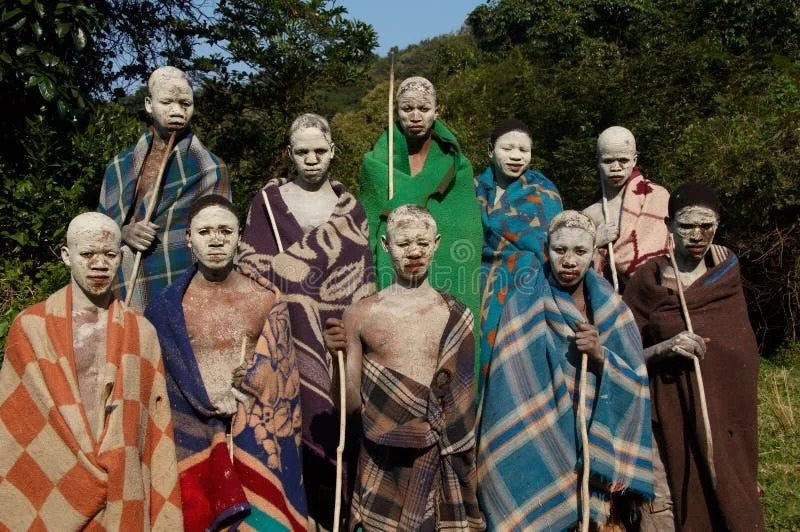
The Xhosa people
How it works:
Physical modification and pain endurance initiation : Boys undergo traditional circumcision between ages 16-26. This is performed by an ingcibi (traditional surgeon).
You cannot cry during circumcision.
If you do, you've failed. The ability to endure pain without showing weakness proves you're ready for manhood's challenges.
Seclusion and Re-birthing : Followed by approximately one month of seclusion in a bhoma (hut).
First 7 days: confined to the hut, restricted food and water.
Next 2-3 weeks: The Ikhankatha (traditional attendant) teaches cultural responsibilities, history and survival skills - basically, man-training.
Learning a new ‘adult’ language : Isikhwetha — a special initiation language proving you've been through it.
Completion with a burning of the old energy : When healed, initiates wash in the river, burn the hut and all possessions, receive new clothes.
A new man is born!
The practice continues today, though controversial.
Eastern Cape records multiple deaths annually from botched circumcisions at illegal initiation schools!
The government has cautioned against these unlicensed operations while respecting the cultural significance of the practice itself.
(Sources: Wikipedia "Ulwaluko" 2025; PMC “Gay Xhosa men's experiences of ulwaluko"; Van Vuuren & De Jongh 1999)
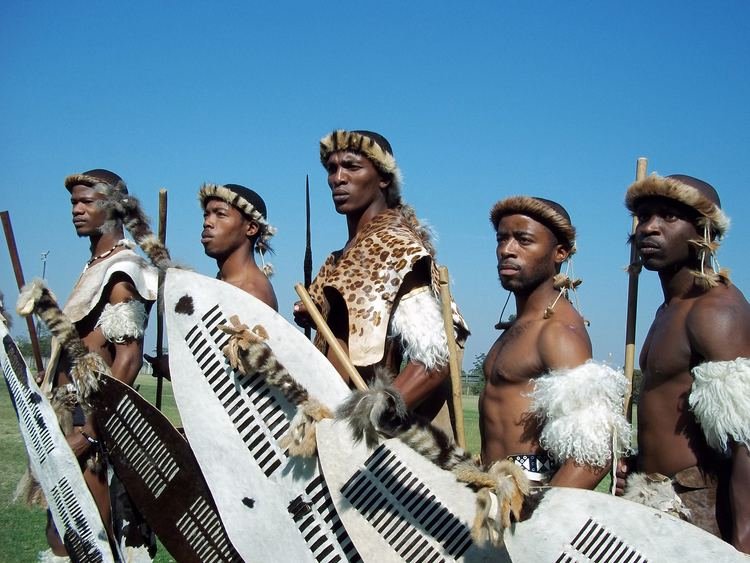
The Zulu people
The Zulu system : Age-triggered
The Zulu have a more gradual system with multiple ceremonies marking progression through life stages:
Ukuthwalwa/Thomba Ceremony:
Seclusion : Boys separated from homes, taken to isolated locations.
Role Preparation : Tribal elders teach adult responsibilities, survival skills, cultural traditions.
Initiated : After ceremony, boy becomes insizwa (young man) — can court but not marry yet.
Hierarchy in Responsibility : Must then complete 10 years in ibutho (age regiment) serving the king.
A man is born! : Finally receives isicoco (head-ring) marking full adulthood.
For women: The Reed Ceremony (Umkhosi Womhlanga)
Role Preparation : Teaching focuses on responsibilities, respect, cultural values.
Hierarchy in Responsibility : Young women gather reeds, present them before the king.
A woman is born! : Traditional dances celebrate fertility, virginity, transition to womanhood.
The Zulu system emphasizes gradual progression rather than single dramatic initiation. But the requirement remains: you must go through these ceremonies to be recognized as adult.
(Sources: "Rites of passage in the Zulu tribe" - ONLYONE TRAVEL 2023; southafrica.co.za)
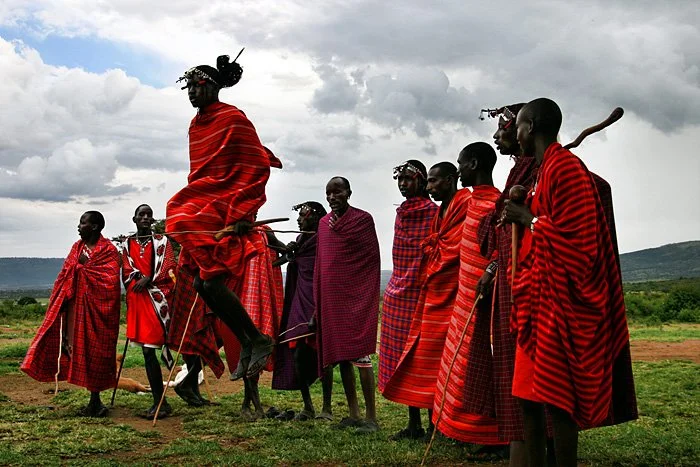
The Maasai Tribe
EAST AFRICA
The Maasai: Seven-Stage Journey from Boy to Elder
The Maasai of Kenya and Tanzania have one of the most elaborate initiation systems I've encountered.
Instead of one ceremony, it's a structured progression through six distinct stages spanning 15-20 years! A thorough effort indeed!
Stage 1: Role preparation
Enkipaata (Pre-initiation, age 15+)
Boy must prove himself ready: carry heavy spear, herd large livestock.
Must herd cattle for seven consecutive days before ceremony.
Community gathers for traditional songs, teachings from elders.
Stage 2: Physical modification and pain endurance initiation
Emuratta (Circumcision, after puberty) :
The most vital initiation ceremony
Boys expected to remain completely calm—no crying
Wear black cloth until initiated as warriors
Failure to endure brings shame to entire family
Stage 3: Seclusion
Emanyatta (Warrior camp, ~10 years)
Young men live in isolated warrior camp (emanyatta)
Learn combat, protection skills, live with age-mates
Dietary restrictions: cannot eat meat before women
Diet supplemented with curdled milk and cow blood
Stage 4: Additional Role Preparation + The man is born!
Eunoto (Warrior-shaving ceremony, every 15-20 years)
Marks transition from junior to senior warrior
Mothers ceremonially shave warriors' long hair
First time drinking milk since circumcision (milk = procreation symbol)
Three leaders chosen: Olaiguanani lenkashe, Oloboru enkeene, Olotuno
Warriors now permitted to marry
Most highly celebrated ceremony among the Maasai
Stage 5: Community inclusion
Enkang oo-nkiri (Meat-eating ceremony)
Performed in camp with 10-20 houses
Special meat ceremony with age-mates
Stage 6: The elder / wise man is born!
Olng'esherr (Junior to senior elder)
Final transition - end of warrior-hood, beginning of elder-hood
Oldest wife shaves husband's head
Full adult responsibilities assumed
For Maasai Women
Stage 1: Role preparation + Inclusion in new societal dynamic
Ekipolon/Eunoto (Girls' initiation)
Follows first menstruation
Teachings about motherhood, caretaking, domestic responsibilities
Rituals celebrating fertility
After completion: ready for marriage
Stage 2: Role taken of a woman in Masaai society
Enkiama (Marriage)
Dowry negotiation (paid in cattle—the ultimate wealth)
Girl moves to husband's homestead
Mother-in-law teaches duties of Maasai wife
(Sources: UNESCO Intangible Cultural Heritage 2023; “Maasai Culture in Tanzania" - visitnatives.com 2024; MAASAI ASSOCIATION; Mohamed Amin Foundation photographic documentation 1987)
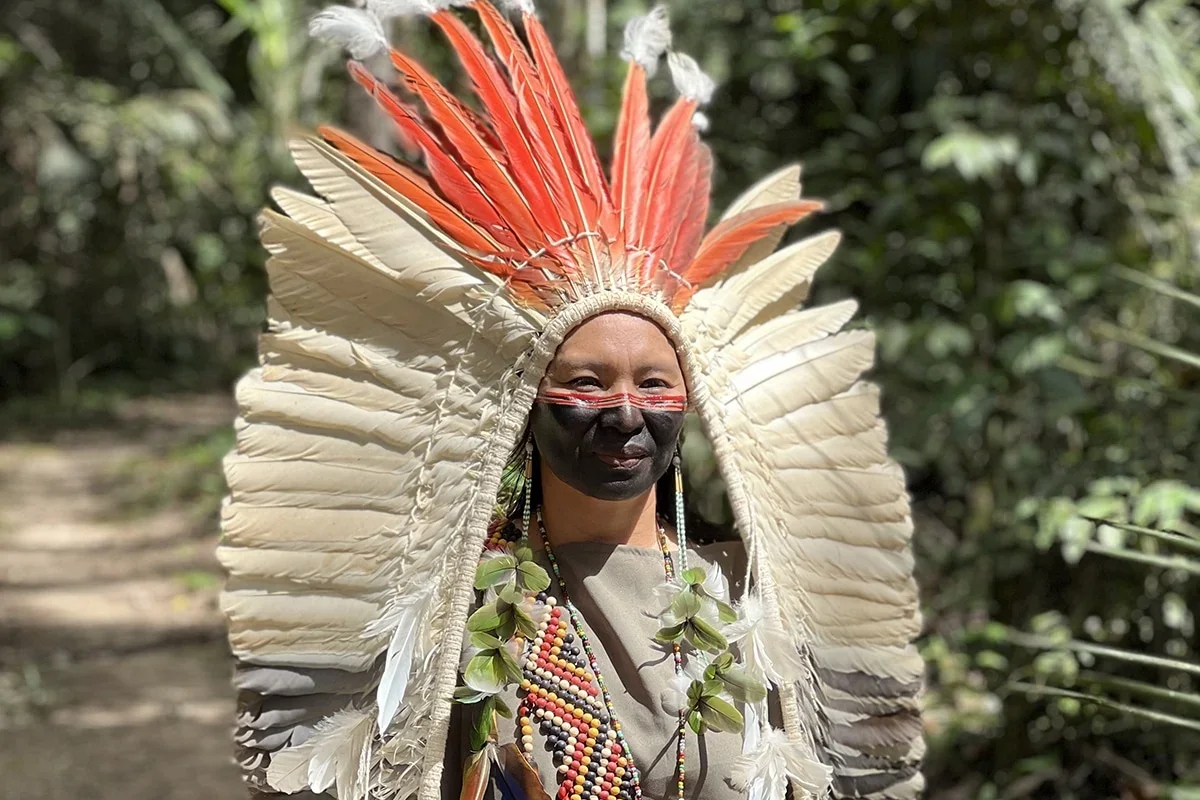
Putanny Yawanawa
THE AMAZON
Yawanawá People: The Shamanic Diet
The Yawanawá of Brazil's Acre region have a spiritually-focused approach.
Their initiations aren't about physical tests of pain - they're about spiritual diet and isolation lasting years, built around plant teachers aka plant medicines like Ayahuasca.
Samakai/Muka Diet - Shamanic initiation
This is a one-year+ commitment, often lasting multiple years, that fundamentally transforms the initiate.
Requirements:
Strict dietary restrictions: only caiçuma; a fermented manioc drink.
Sexual abstinence.
Avoid meat, fruits, sweets.
Period of isolation and fasting.
Ingestion of hallucinogenic substances, such as Ayahuasca, pepper and rare muca root.
Physical trials:
Suck the heart of an anaconda - no biggie.
Chop down a bee hive - whatever.
Other tests determined by elders - hopefully there isn’t a Johnny Knoxville equivalent in the Yawanawa tribe.
Teachings:
Curing chants (shuãnka).
Medicinal plant knowledge.
Sacred stories and cultural wisdom.
Spiritual connection techniques.
Sacred Medicines Used
A common mix if you’ve ever sat in an Ayahuasca ceremony:
Ayahuasca (Uni): The primary medicine for connecting to ‘source’ - the spiritual dimension society has conditioned as a thing separate from us and is believed as typically inaccessible, but is very much accessible with healthy teachings. Ayahuasca is brewed fresh before ceremonies, mixing a plant vine and root to create the potent mixture. DMT is strong in the brew, allowing for rich psychedelic visuals and cathartic movements in the body of dense emotions.
Rapé (Rume): Sacred snuff tobacco. For the Yawanawá, this is the principal medicine - the one that gives security and has the strongest healing power. Receiving a Rume initiation is part of the study, though rapé is considered a deeply unpleasant experience for people new to the experience. It is profoundly powerful, regardless.
Rare Muca: Sacred root plant. Only warriors or healers preparing for initiation are allowed to consume this. The rituals involve special incantations, smudging herbs, prayers. This is why you never see it in city ceremonies hosted by Yawanawa outside of the tribes / jungle.
Sananga (Kanapa Vetxexeketi): Medicine from the bark of Tabernaemontana genus root. Used to heal physical eyes, improve sight, open the third eye, illuminate subconscious patterns. Burns like a motherf*cker, pretty much like someone squoze lemon into your eyes. Feels pretty great after though.
The Diet Process / Dieta
During a Samakai ceremony I researched, the shaman says an opening prayer (seya) into a clay pot (shumu) filled with caiçuma.
“When you drink the medicine from the shumu sanctified by her, a seed is planted in your body and mind. It is then your task to let the plant that emerges from this seed grow within you during the samakai period."
Revolutionary Change: Women Shamans
In 2005, Putanny and her sister became the first women in Yawanawá history to take the sacred oath. After a year-long strict diet, Putanny earned recognition as a spiritual leader.
This broke millennia of tradition where shamanic spirituality belonged exclusively to men. Now the male and female spiritual universes have united, bringing the magic of feminine spirituality to strengthen Yawanawá culture.
Historical Context:
The Yawanawá nearly went extinct - down to about 50 members. In the 1980s, they created a life plan: they expelled rubber tappers, evangelists, and alcohol.
They cleaned up colonial poisons and brought back their culture, spirituality and sacred plant medicines. Chief Biraci was among the first post-rubber-boom generation to complete an initiation diet.
The dieta practice had stopped for nearly 40 years before 2000. Then three strong men felt the calling to reconnect with ancient wisdom. Around the same time, missionaries lost their foothold and were expelled from Yawanawá territory. The tribe emerged from decline and loss, rebirthing into a New Time.
(Sources: pib.socioambiental.org “Yawanawá - Indigenous Peoples in Brazil"; “Introduction to the Yawanawa Creation Stories" 2023; Inga Backen “Samakai - Sacred diet with the Yawanawá"; The Yawanawa Experience - Indigenous Travel; sacred-snuff.com)
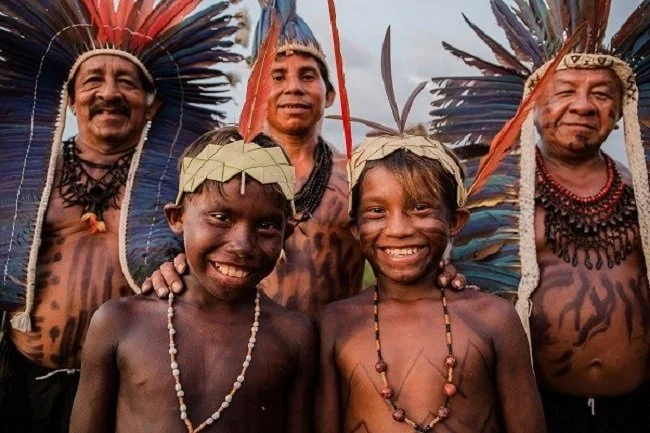
The Sateré-Mawé people
Sateré-Mawé People
The Bullet Ant Glove INITIATION
If you think adulthood is hard, consider the Sateré-Mawé initiation which scores 100 Nopes out of 10 on my scale of “would I do this”. It actually reminds me of this scene in Dune, the movie made from the much-loved book series which was also a cult David Lynch studio-spite-movie.
I would likely do this before doing the bullet ant glove initiation ritual.
I’d probably do 4 sundances before I consider a bullet ant glove, and I’d still likely not do it.
This bullet ant bite is the most painful insect sting in the world - rated 30 times worse than a bee sting - and boys must endure it not once, but twenty times.
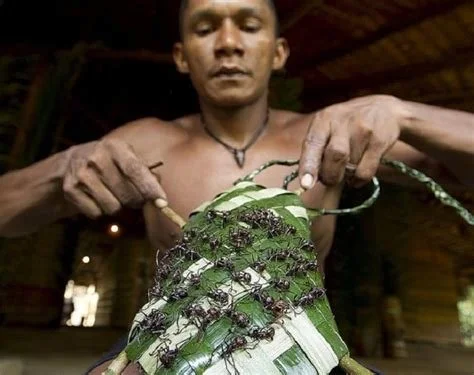
And here’s a bullet ant glove being made. Notice the unhappy face.
The Tucandeira Dance AKA Bullet Ant Initiation Part 2
Age: Boys are as young as 9-13, though 12-13 are most common.
The Process:
Gathering: Boys enter the jungle to find and harvest bullet ants (Paraponera clavata).
These ants are about one inch long, and their sting is so painful the species is called "vinte-e-cuatro-horas" (twenty-four hours) because the pain from a single sting lasts a full day.
Preparation: Elders sedate the ants by submerging them in an herbal solution made from cashew leaves. While sedated, 80-100 ants are woven into gloves made from leaves—stingers pointing inward.
The gloves look like large oven mitts. Hands are coated with charcoal (believed to confuse the ants and inhibit stinging—though this clearly doesn't work well).
Are you f*cking kidding me?
The Ritual: One by one, boys slip on the gloves for 10 minutes. During this time, they must dance to distract from the pain.
When I desperately need to pee and cannot, I find dancing also helps at least for a few minutes.
The entire community watches: Crying out or showing weakness is forbidden.
Physical Effects:
The pain is considered 30x worse than bee sting
It tops the Schmidt Sting Pain Index - the definitive scale for insect sting pain. I don’t know who Schmidt is, but if he did this for all of us, I salute him and will raise a toast to him.
Sensation is described as “being shot" - hence the name “bullet ant", though I can’t imagine what being shot 80 times in your hand could feel like.
Temporary paralysis of hand and arm - which seems like a blessing honestly.
Trembling and shaking for days - hopefully to shake the trauma out of the body.
Possible hallucinations - so there’s one upside at least.
Effects last 24 hours per session - which on the other side must feel as relieving as a toasted cheese sandwich in the middle of the Playa at Burning Man.
Can take 2 weeks to recover from single session - which is impressive considering the torturous experience.
The Requirement: Twenty sessions. TWENTY SESSIONS. TWENTY X 80-100 BULLET ANTS IN A GLOVE, BITING YOU WHILE YOU DANCE TO TRY AND DISTRACT FROM THE PAIN, AND GET TEMPORARY PARALYSIS AND PAIN FOR 24 HOURS.
Boys must complete the ritual twenty times over several months or years to achieve full manhood status. Honestly they should get fucking knighthoods for this and a private beach house, and free therapist for the rest of their days.
Why?
Really; WHY?
The Sateré-Mawé believe this prepares boys for life.
According to tribe members, the painful initiation is good preparation for life and proves each boy can fulfill the duties of manhood. The adult world is full of pain. Boys must demonstrate they'll face this pain while staying calm and collected, ready for whatever struggles lie ahead.
I don’t know what they live through there, but if that’s what is needed to prepare for it, all Sateré-Mawé have my highest respect.
Cultural Significance:
Only after completing all 20 sessions is a boy granted permission to marry and hunt.
Without completing the ritual, he cannot take on full adult responsibilities. The tribe's survival depends on men who can endure.
Biological Context:
Bullet ant venom contains poneratoxin - a potent neurotoxic peptide. Aside from intense pain, it causes fever, chills, tachycardia, cardiac arrhythmias, lymphadenopathy, local edema, nausea, vomiting, and paresthesia/paralysis of limbs.
A person is likely to need 2 weeks to recover from a single sting. A SINGLE STING. NOT 80. OR A HUNDRED. OR TWENTY TIMES. Participants can shake uncontrollably for days.
The Sateré-Mawé live in the region of the mid-Amazon River, on the border of Amazonas and Pará states.
Population approximately 13,350. They were the first to domesticate and cultivate guaraná; a stimulant that rose to popularity during the great Red Bull energy drink renaissance of the 1990s. The name means "caterpillar of fire" (Sateré) and "intelligent and curious parrot" (Mawé).
(Sources: Bosmia et al. 2015 “Ritualistic Envenomation by Bullet Ants," Wilderness & Environmental Medicine; Smithsonian Magazine 2014; Mawé people - Wikipedia 2025; Sick History 2024)
Come back for Part 2, soon!